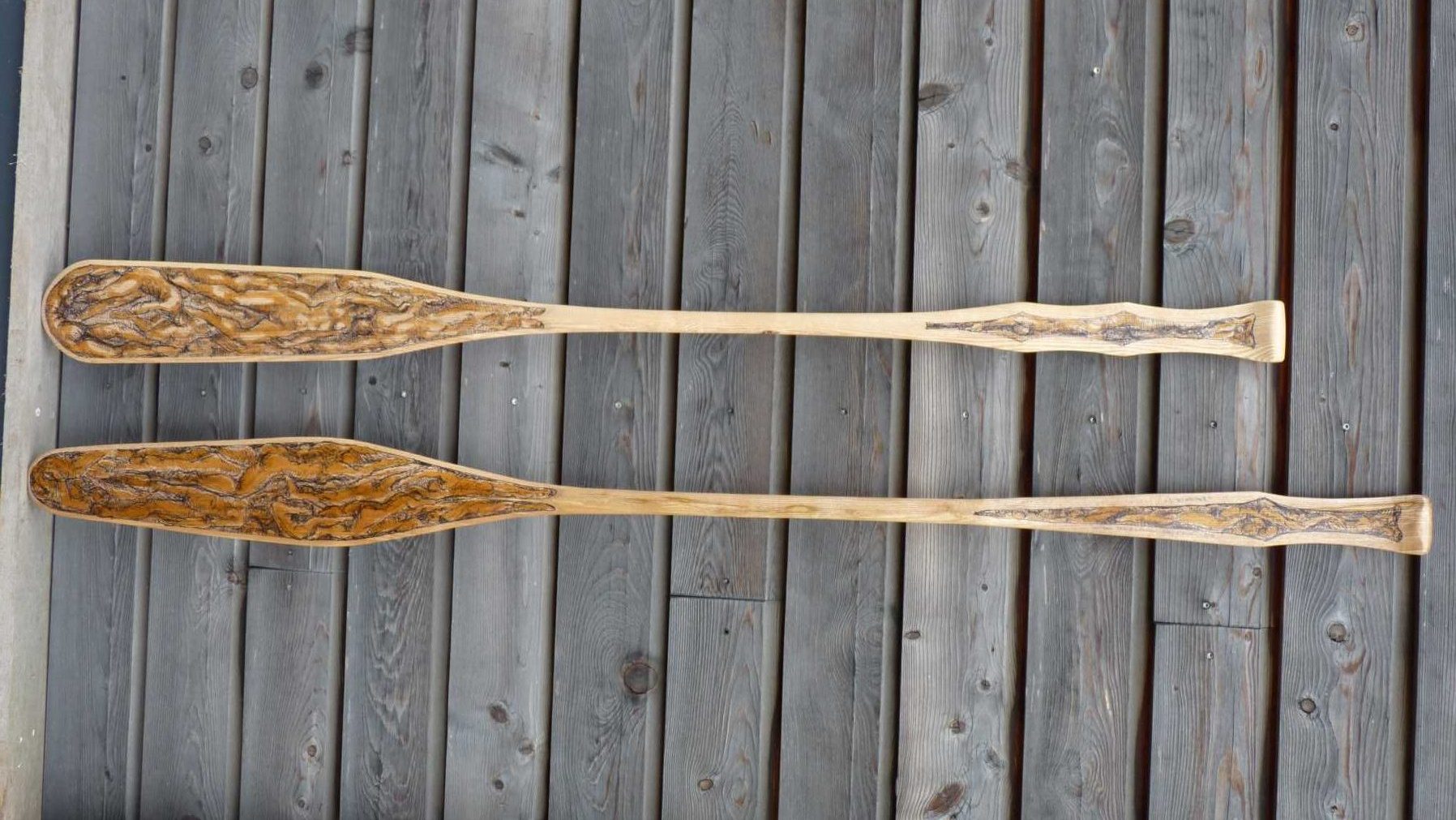
FRAME Canoe Paddles
The FRAME-Wagner-Canoe label, under which I build plywood/wood boats in the style and technology of Native American birch bark canoes, has been in existence since 1994. Frame paddles have been available since 2004. Until 2014, I built my lightweight, flexible frame classics in various lengths and woods, and since then I have also developed a range of other paddle shapes based on illustrations of historical canoe paddles. I make all the paddle shapes by hand from a wide variety of woods, either as one piece or with a laminated shaft. The surfaces are treated with tung oil. Pre-bent plywood is also used for the freestyle paddles, as well as a PU varnish for the surface. My paddles are characterized by high functionality in use with amazing lightness. I achieve this by selecting the right wood and shaping it with hand planes. I work closely with the material, reacting to the characteristics of each piece and making each paddle unique. It is not always possible to predict which suitable wood I will have available, but the range is wide. I like to use European or American cherry, European or American maple, ash, alder and oak. Some of my oak paddles weigh only 500g with a shaft length of 76cm, and I have been paddling with a cherry paddle of the same length weighing 430g since 2014.
FRAME classic canoe paddle
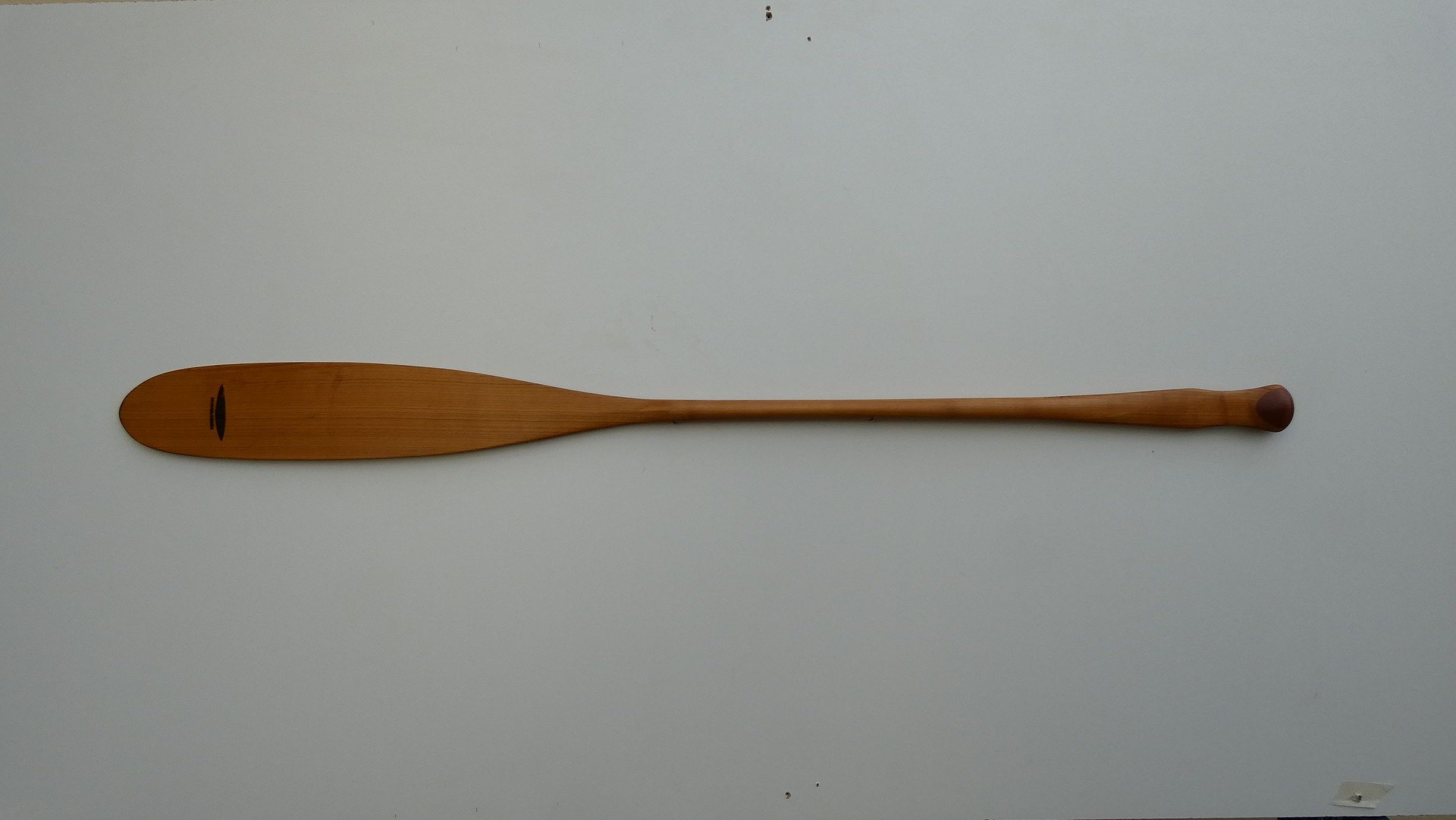
The shape is similar to the beavertail and works very well as a touring paddle, as well as for Canadian style. The widening of the shaft towards the handle makes it possible to shorten the paddle. The paddle has flex in the blade and shaft, which makes paddling easy on the body and enables good efficiency even with unsophisticated paddling technique. The handle is usually spherical, which suits all hand sizes. The central rib, which is created by the double concave at the transition from the shaft to the blade, ends in the blade after about 15 cm.
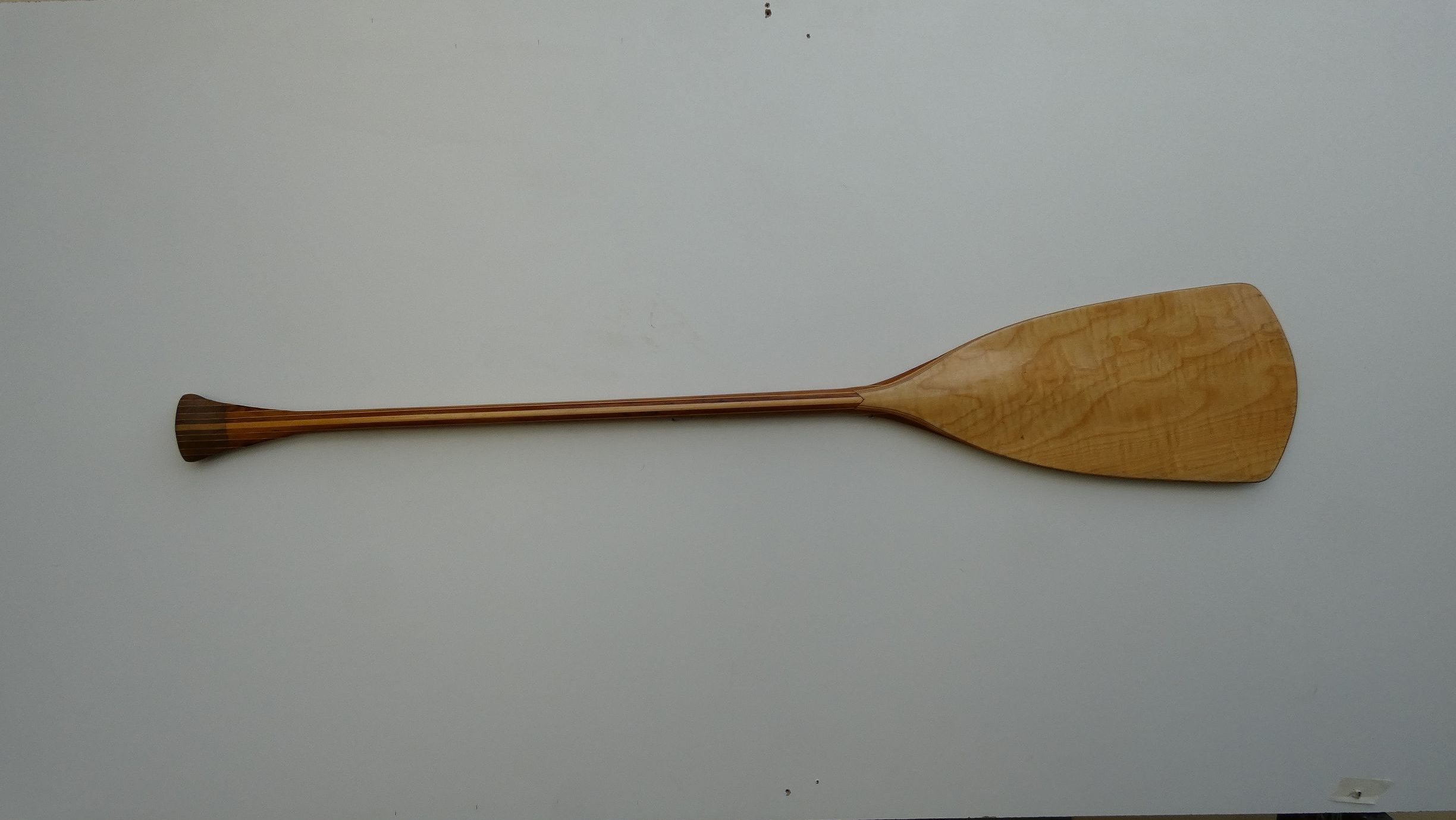
FRAME freestyle canoe paddle
The shaft is layer-glued and hand-planed from western red cedar and maple, the blade is made from two pre-bent pieces of plywood, creating a hollow space in the blade. The splayed blade shape allows the paddle to be guided even closer to its own center of gravity and therefore a very precise application of force for American freestyle paddling, which is what it was developed for. Not suitable for tours in rocky waters.
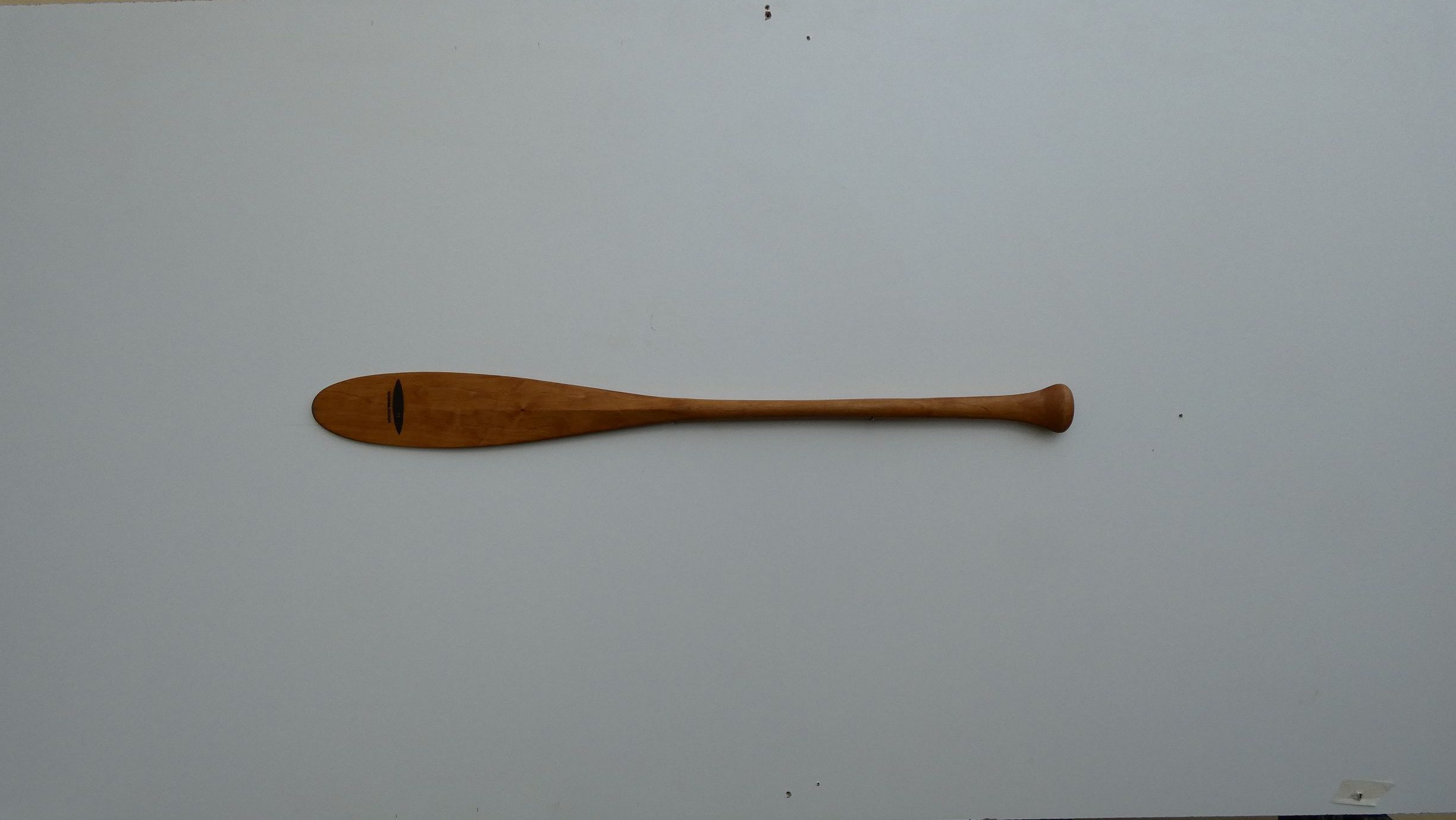
FRAME children's canoe paddle
Made from alder in the desired length. Weight is less than 400g.
FRAME catchkeeper canoe paddle
Modeled on the shape of the Inuit storm paddles, it is a training paddle that can be used on both sides to find the “catch” (for this exercise, however, you can also use a substructure batten of the appropriate length).
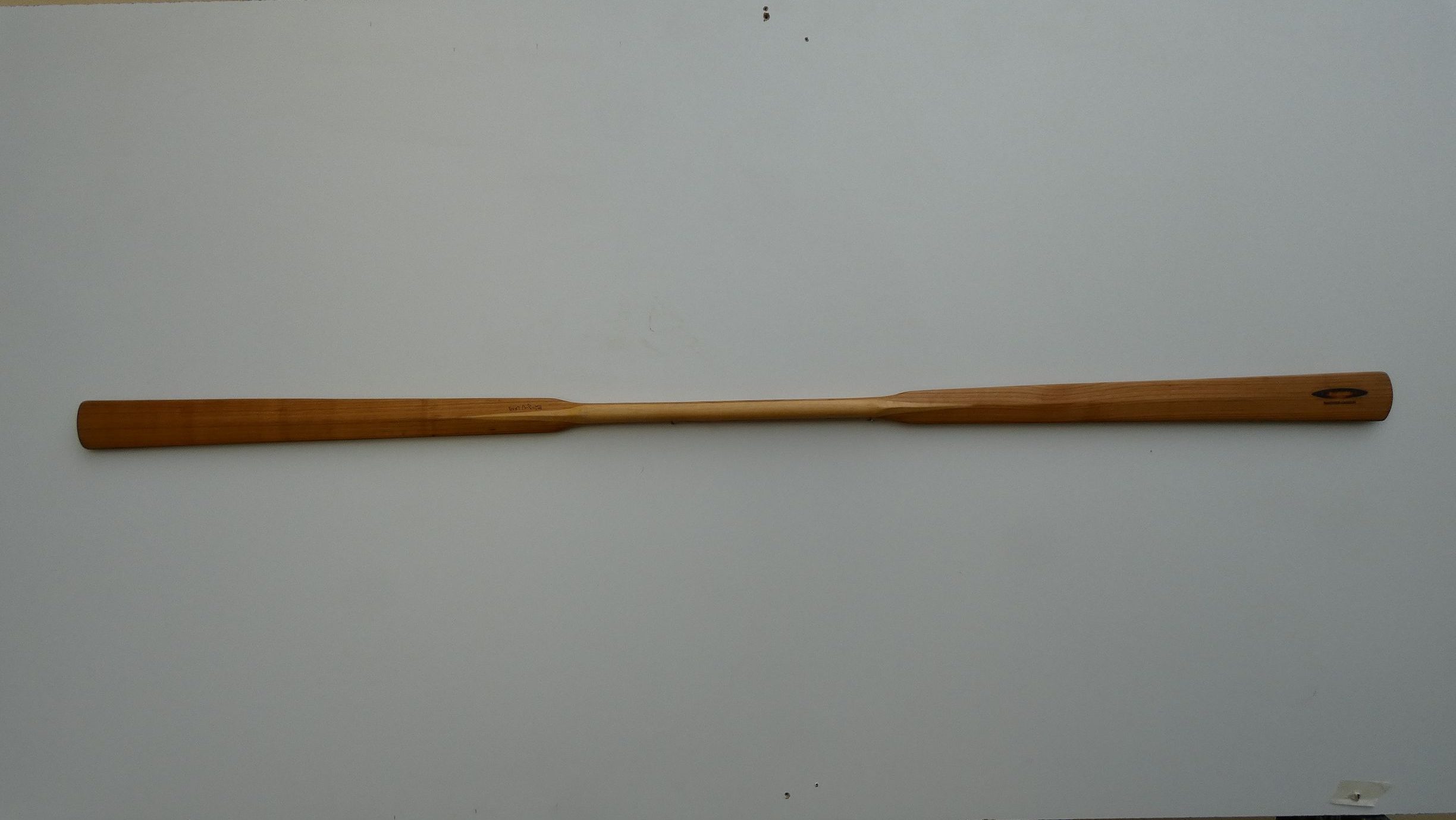
All of the following paddle shapes have an almost continuous “center rib” and, as a result, double concave blades on both sides. This special shape makes the blade more rigid, with thinner wood, which has a highly beneficial effect on the weight and the “cutting” of the blade through the water. In addition, the blade reaches the “catch”, i.e. the point where it “grabs” in the water, much faster and more precisely.
FRAME beavertail canoe paddle
This paddle works very well as a touring paddle in flat water and for Canadian style paddling. The widening of the shaft towards the handle makes it possible to shorten the paddle. The paddle has flex in the blade and shaft, which makes paddling easy on the body and allows good efficiency even with unsophisticated paddling technique. Shaft thicknesses and handle shapes and sizes vary as desired (and at the whim of the producer).
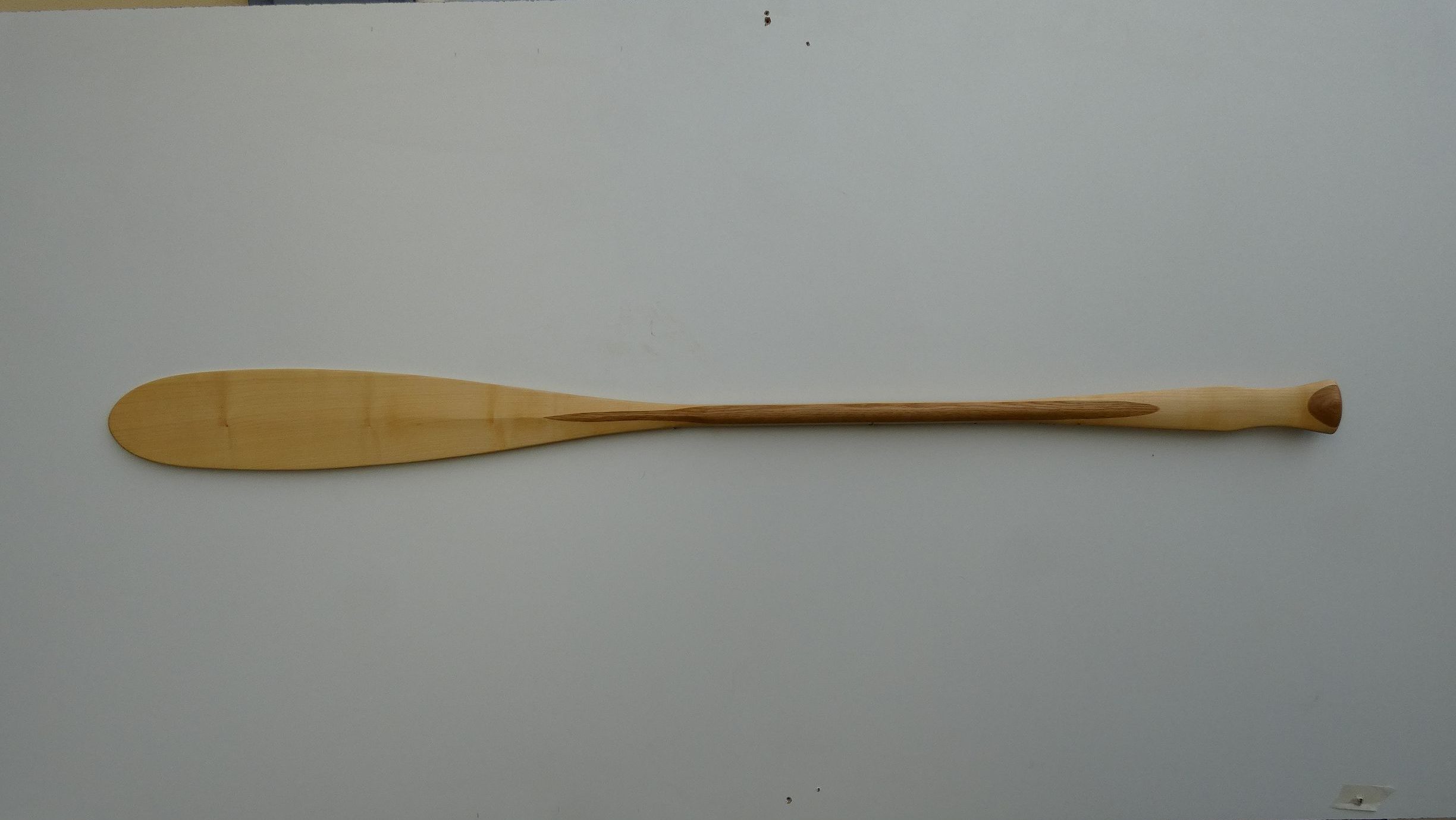
FRAME-Tete-de-Boule canoe paddle
This paddle shape corresponds to the birch bark canoes on which my FRAME boats are based. I underestimated the shape for a long time, but it is now one of my personal favorites. The Tete-de-Boule is an excellent touring paddle that also works well for Canadian style and American freestyle. It has flex, etc., as with the other shapes.
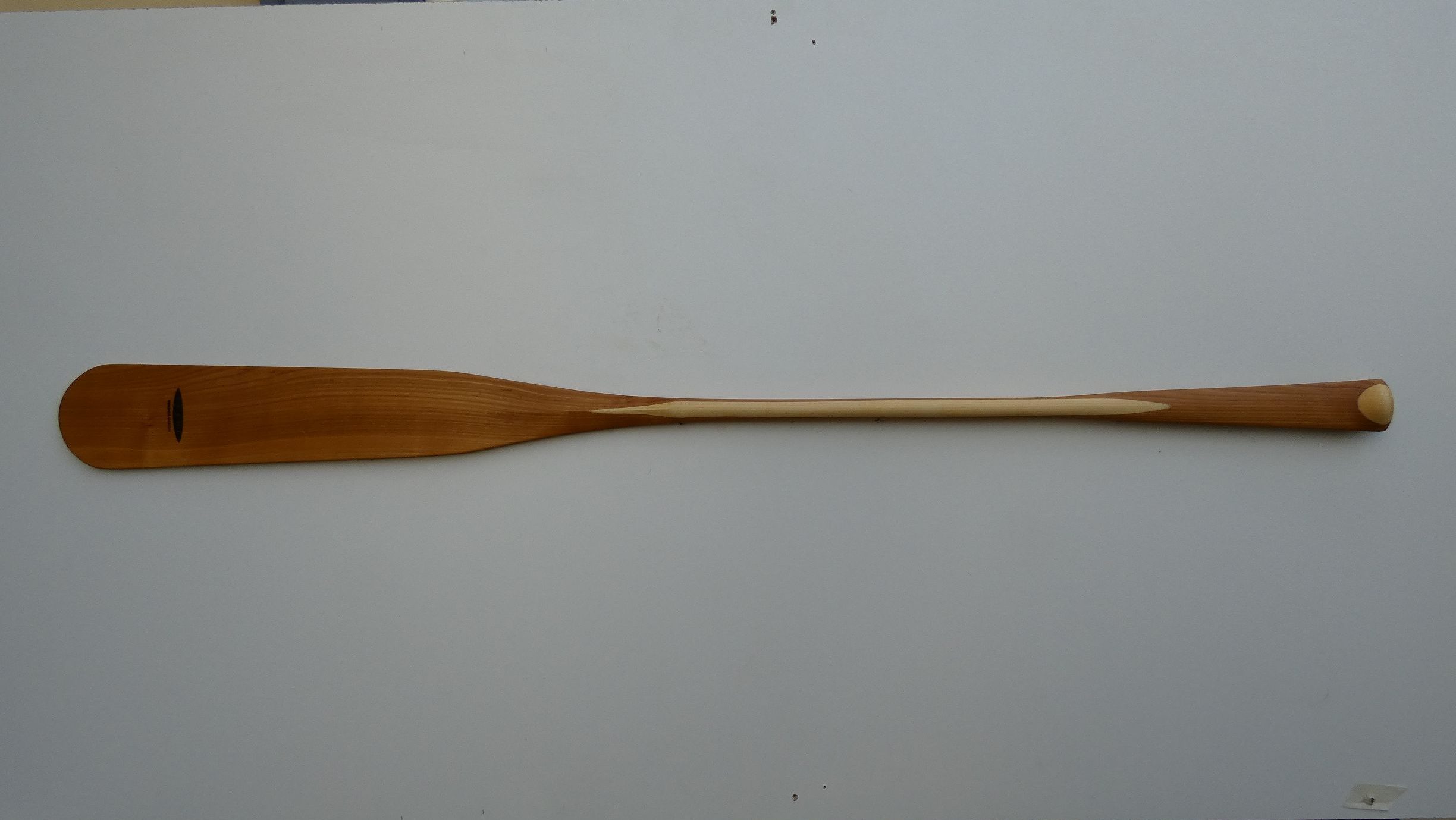
FRAME Malecite canoe paddle
Works very well as a touring paddle in flat water and for Canadian style. The widening of the shaft towards the handle makes it possible to shorten the paddle. The paddle has flex in the blade and shaft, which makes for body-friendly paddling and good efficiency even with unsophisticated paddling technique. The blade shape shifts the leverage point more towards the body, which increases the feeling of paddling lightly. Shaft thicknesses and handle shapes and sizes vary as desired (and at the whim of the producer).
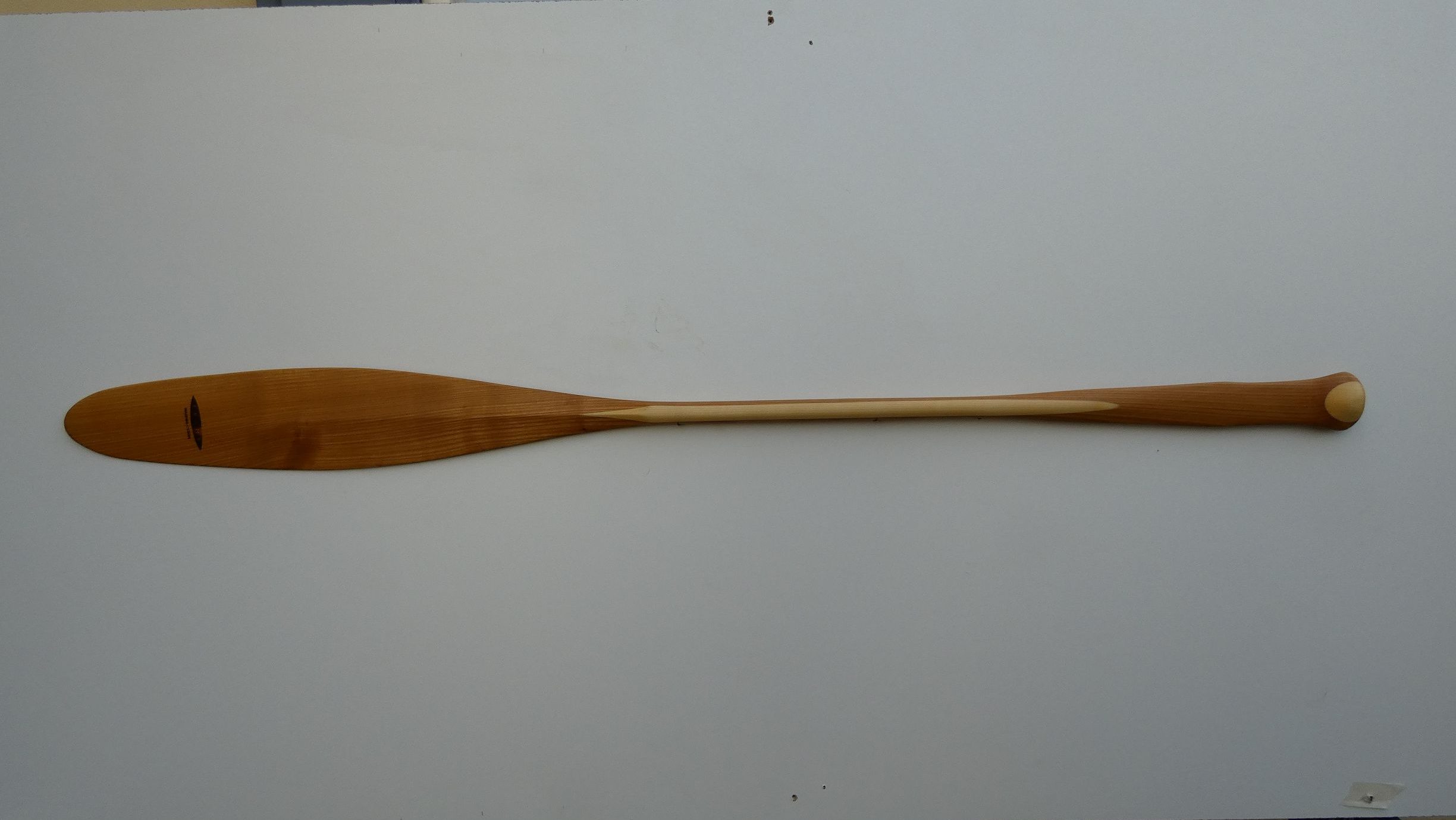
FRAME Northwood canoe paddle
The paddle blade shape shifts the leverage point even more towards the body. Otherwise, it works the same way as the other shapes.